Semaglutide Weight Loss in Miami Gardens
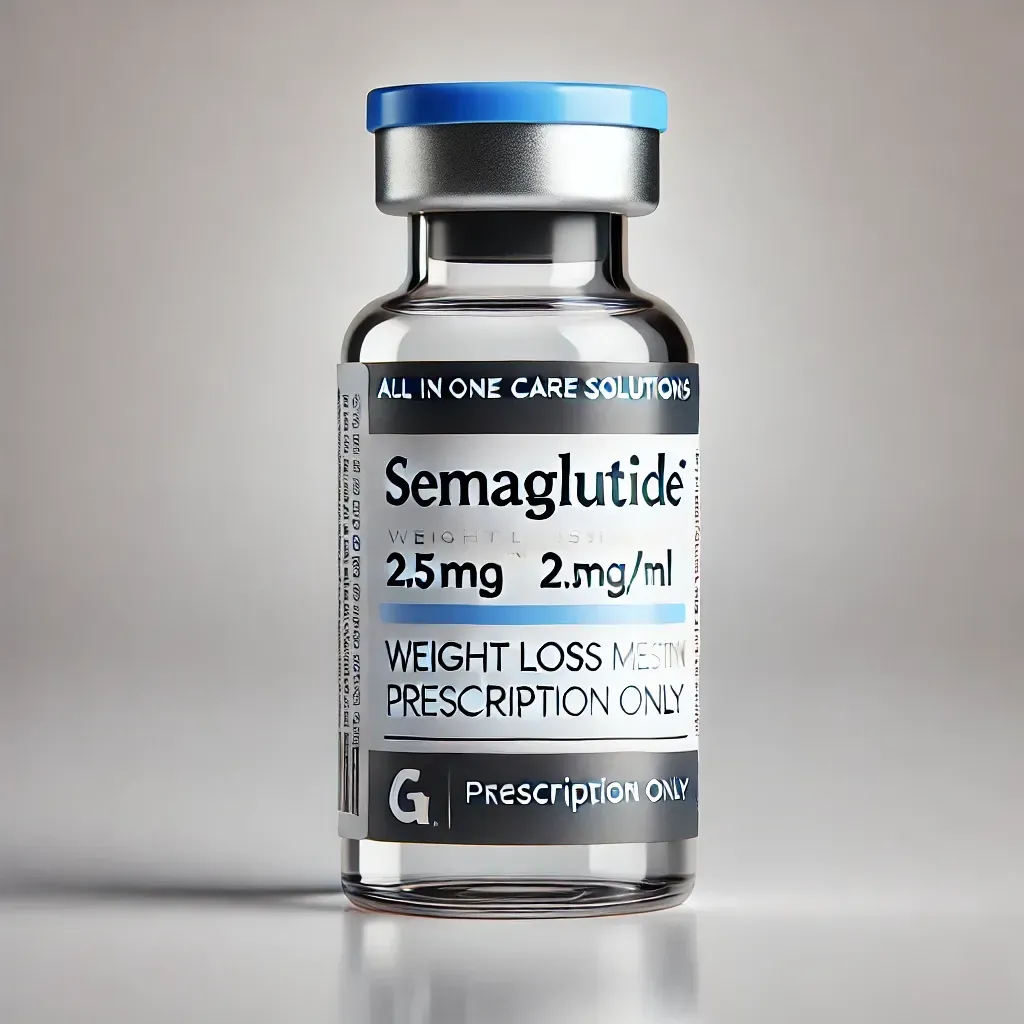
Discover a reliable and medically supervised path to weight loss with FDA-approved Semaglutide at All In One Care Solutions. Lose weight safely and effectively under the care of licensed professionals.
¿Listo para alcanzar tus metas de pérdida de peso? ¡Descubre si calificas!


Licensed Professionals
Supervised by certified medical professionals
FDA-Approved
FDA-approved medications and treatments
Convenient Location
Miami Gardens, Miami Lakes & surrounding areas
Transparent Pricing
No hidden fees, flexible payment options
What is Semaglutide?
Semaglutide is a prescription medication originally used to manage blood sugar in type 2 diabetes patients. Clinical research now confirms its powerful effect in weight management.
Suppressing Appetite
Reduces hunger and cravings for sustainable weight loss
Increasing Fullness
Helps you feel satisfied with smaller portions
Consistent Weight Loss
Supporting long-term, sustainable weight management
¿Listo para alcanzar tus metas de pérdida de peso? ¡Descubre si calificas!
Semaglutide Program
Progressive dosing program for optimal results
Month 1
0.25 mg x 4 weeks
- Initial dose for adaptation
- Medical supervision included
- Weekly injections
¡Descubre si calificas!
Month 2
0.50 mg x 4 weeks
- Increased dose for better results
- Enhanced appetite suppression
- Continued medical monitoring
¡Descubre si calificas!
Month 3
0.75 mg x 4 weeks
- Maximum therapeutic dose
- Optimal weight loss results
- Long-term maintenance plan
¡Descubre si calificas!
Financing available with CareCredit

Is Semaglutide Right for You?
Semaglutide may be ideal if you:
Have a BMI over 27
Struggling with weight-related health concerns
Struggle with hunger or appetite control
Difficulty managing portion sizes and cravings
Have prediabetes or insulin resistance
Blood sugar management challenges
Want a long-term, science-backed solution
Looking for proven, sustainable weight loss
¿Listo para alcanzar tus metas de pérdida de peso? ¡Descubre si calificas!
Why Choose All In One Care Solutions?
We provide medically supervised weight loss programs using FDA-approved treatments for safe, effective, and long-term results
Medically Supervised Treatment
Personalized care from certified medical professionals
FDA-Approved Treatments
Safe and proven to work with clinical backing
Expert Medical Team
Dedicated to your success with ongoing support
How Semaglutide Works
Semaglutide is an FDA-approved, once-weekly injectable medication that mimics a natural hormone (GLP-1) to reduce appetite and regulate blood sugar. At All In One Care Solutions in Miami Gardens, our tailored program includes medical supervision, progressive dosing, and lifestyle support—often resulting in 12–15% body weight loss within months. (Source: allinonecaresolutions.com, 2025)
TL;DR Summary
- Semaglutide reduces appetite and promotes fat loss
- FDA-approved, weekly injections
- Tailored dosing by Miami Gardens licensed providers
- Expected 10–15% weight loss over several months
- Non-surgical, medically supervised care
How to Get Started
- Book your consultation
- Get a full evaluation from our clinical team
- Receive a personalized dosing plan
- Begin weekly Semaglutide injections
- Return for follow-up and support
Semaglutide vs. Other Options
| Medication | Use Case | Avg. Weight Loss | Dosing Frequency |
|---|---|---|---|
| Semaglutide (Wegovy) | Obesity, Type 2 Diabetes | ~12–15% | Weekly |
| Tirzepatide (Zepbound) | Dual Hormone Weight Loss | ~15–18% | Weekly |
| Phentermine | Appetite Suppressant | ~5–10% | Daily |
Frequently Asked Questions
Are there any side effects?
Like any medication, Semaglutide may have side effects such as nausea, upset stomach, or changes in bowel habits. Our healthcare team will closely monitor you and provide guidance to manage any side effects effectively.
Who is a Good Candidate?
Individuals with a BMI ≥ 27 experiencing weight-related health issues (e.g., hypertension, high cholesterol). People who have tried traditional weight-loss methods without significant success. Adults approved by a healthcare provider following a thorough medical evaluation.
How quickly will I see results?
Most patients begin to notice weight loss within the first few weeks. With consistent use and proper medical supervision, clients in Miami Gardens typically experience significant weight reduction within 2-3 months, especially when paired with healthy habits.
Related Services We Offer
Comprehensive healthcare solutions under one roof
Weight Loss Programs
Comprehensive weight management including Tirzepatide and other FDA-approved treatments
Learn MorePrimary Care Services
Complete healthcare including annual exams, chronic disease management, and preventive care
Learn MoreIV Therapy Services
Wellness and recovery treatments including Myers Cocktail, NAD+, and immune boost therapy
Learn MoreReady to Start Your Weight Loss Journey?
Take our quick qualification survey to see if Semaglutide is right for you
¿Listo para comenzar tu viaje de pérdida de peso? ¡Descubre si calificas para Semaglutida!
Call Us
(786) 446-9414Visit Us
16191 NW 57 Ave
Miami Gardens, FL 33014
Hours
Monday - Friday
8:00 AM - 5:00 PM

© 2024 All In One Care Solutions. All rights reserved.
Transform Your Life with Ozempic for Weight Loss in Miami
Semaglutide for Weight Loss: Comprehensive Benefits and Treatment Guide
Semaglutide is an evidence‑based pharmacological therapy for patients with obesity that has demonstrated measurable clinical benefit. This guide summarises mechanisms of action, dosing and administration, adverse effects, and the integration of semaglutide into individualised treatment plans. Weight management is determined by metabolic and lifestyle factors; semaglutide targets these through validated physiological pathways. The sections below detail how semaglutide promotes weight loss, recommended administration practices, known risks, formulation differences, and available support services.
How Does Semaglutide Promote Effective Weight Loss?
Semaglutide facilitates weight loss as a GLP‑1 receptor agonist. It mimics endogenous GLP‑1 to increase meal‑related insulin secretion, suppress glucagon, slow gastric emptying, and modulate appetite and energy intake. These effects reduce caloric intake and support sustained weight reduction by addressing physiological drivers of obesity.
The mechanisms by which GLP‑1 regulates appetite and body weight are extensively documented in peer‑reviewed literature.
GLP-1's Mechanism: Appetite & Weight Regulation
Glucagon‑like peptide 1 (GLP‑1) derives from the pre‑proglucagon gene and is expressed in pancreatic α‑cells, intestinal L‑cells, and neurons in the caudal brainstem and hypothalamus. GLP‑1 influences appetite and weight through actions on the gastrointestinal tract and through direct regulation of feeding centres. It delays gastric emptying and reduces gut motility in humans. Central administration reduces food intake independent of gastric distension, and peripheral administration modulates central feeding pathways. The combined peripheral and central receptor activity appears responsible for GLP‑1's effects on satiety.
Effects of GLP-1 on appetite and weight, 2014
What is the mechanism of action of semaglutide in obesity management?
Semaglutide activates central GLP‑1 receptors to reduce hunger signals and increase satiety, which lowers caloric intake. It delays gastric emptying, prolonging postprandial fullness. Clinical trials attribute observed weight loss to these mechanisms, reporting mean reductions near 15% over a 68‑week period.
How do GLP-1 receptor agonists support weight reduction?
GLP‑1 receptor agonists, including semaglutide, improve metabolic function and glycaemic control while producing substantial weight loss compared with many alternative agents. They have also demonstrated cardiovascular benefit in relevant populations, supporting their use in patients with obesity and associated comorbidities.
What Are the Recommended Dosage and Administration Guidelines for Semaglutide?
Appropriate dosing and administration are essential to optimise semaglutide's clinical effect. The medication is most commonly administered by subcutaneous injection; clinicians should individualise dosing schedules according to patient response and tolerability.
Subcutaneous injection is the standard route of administration; oral semaglutide formulations are also available.
Semaglutide Formulations: Subcutaneous vs. Oral Efficacy
Semaglutide is the only GLP-1RA that is available in both an subcutaneous semaglutide and once-daily oral semaglutide, once-weekly subcutaneous semaglutide 1.0 mg reduced.
Efficacy of semaglutide in a subcutaneous and an oral formulation, 2021
How to properly use semaglutide injections for weight loss?
Adhere to the following administration guidelines for semaglutide injections:
- Injection Site : Administer the injection in the abdomen, thigh, or upper arm, rotating sites to avoid irritation.
- Frequency : Inject once weekly, at the same time each week, to maintain consistent levels in the bloodstream.
- Storage : Store unused semaglutide pens in the refrigerator and allow them to reach room temperature before injection.
These procedures optimise therapeutic effect and reduce the risk of local and systemic adverse events.
What are the dosage differences between Wegovy and Ozempic?
Wegovy and Ozempic differ in dosing and indication. Wegovy, approved for weight management, typically starts at 0.25 mg once weekly and is titrated to a 2.4 mg weekly maintenance dose. Ozempic is indicated for type 2 diabetes and usually begins at 0.25 mg once weekly, commonly increasing to 1 mg weekly with the option to escalate to 2 mg depending on clinical need. Recognising these differences ensures appropriate selection for weight versus glycaemic management.
| Brand | Indication | Starting Dose | Maintenance Dose |
|---|---|---|---|
| Wegovy | Weight Management | 0.25 mg | 2.4 mg |
| Ozempic | Type 2 Diabetes | 0.25 mg | 1 mg (can be increased to 2 mg) |
The table summarises dosing strategies and indications for Wegovy and Ozempic.
What Side Effects and Safety Considerations Should Patients Know?
Semaglutide is generally well tolerated; however, clinicians and patients must be aware of potential adverse effects and safety considerations to inform treatment decisions.
What are common and serious side effects of Wegovy?
Common adverse effects of Wegovy are gastrointestinal and include nausea, vomiting, diarrhoea, constipation, and abdominal pain; these symptoms are often transient. Serious events reported include pancreatitis and renal complications. Patients should report severe abdominal pain or marked changes in urination to their healthcare provider promptly.
Who should avoid semaglutide treatment due to contraindications?
Contraindications include a personal or family history of medullary thyroid carcinoma or multiple endocrine neoplasia syndrome type 2. Patients with severe gastrointestinal disease or a history of pancreatitis require specialist evaluation before initiation. A thorough medical assessment is necessary to ensure safe use.
Further research has examined a potential association between GLP‑1 receptor agonists and an increased risk of certain cancers, notably thyroid cancer.
GLP-1 Receptor Agonists & Thyroid Cancer Risk
A meta‑analysis detected an increased risk of thyroid cancer with GLP‑1 receptor agonists (MH‑OR 1.52, 95% CI 1.01–2.29, p = 0.04). This signal was more apparent with agents such as liraglutide and semaglutide, which produced larger reductions in HbA1c and body weight.
GLP‐1 receptor agonists and the risk for cancer: a meta‐analysis of randomized controlled trials, GA Silverii, 2025
Careful patient selection is essential, particularly when a family history of specific cancers may increase risk.
Semaglutide Safety: Cancer Risk & Patient Selection
ABSTRACTBackgroundThe weight loss medication semaglutide has recently become widely recognized for its effectiveness. Medical professionals have expressed safety concerns about semaglutide for patients who have a family background of thyroid or uterine cancers. The FDA has communicated about potential dangers requiring careful selection of patients before treatment. This study reviews existing research about semaglutide as a weight management treatment for patients with familial cancer histories while analyzing its potential advantages and dangers.
Semaglutide for Weight Loss in Patients with a Family History of Thyroid or Uterine Cancer: A Systemic Review, 2025
How Do Wegovy and Ozempic Compare for Weight Loss Treatment?
Wegovy and Ozempic both contain semaglutide but differ in formulation and approved indications; these differences affect their relative effectiveness for weight loss.
What are the efficacy differences between Wegovy and Ozempic?
Clinical trials indicate Wegovy produces greater weight loss than Ozempic. Trial data report mean weight reductions near 15% over 68 weeks with Wegovy. Ozempic, while effective for glycaemic control, typically yields more modest weight loss of approximately 5–10%. This distinction is relevant when selecting therapy for weight management.
A recent systematic review further supports semaglutide's superior efficacy compared with several established weight‑management medications.
Semaglutide's Effectiveness for Weight Loss vs. Other Drugs
Phentermine, topiramate, orlistat, lorcaserin, naltrexone, liraglutide, and semaglutide (Wegovy) are among the drugs used for weight management, though semaglutide (Ozempic) has emerged as a highly effective option, demonstrating significant weight loss in clinical trials.
Comparative effectiveness of semaglutide, liraglutide, orlistat, and phentermine for weight loss in obese individuals: a systematic review, JP Patel, 2025
Ongoing research compares semaglutide with emerging agents, such as tirzepatide, in real‑world settings.
Semaglutide vs. Tirzepatide: Real-World Weight Loss Efficacy
BackgroundBoth tirzepatide and semaglutide have been shown to reduce weight for patients with overweight or obesity in randomized controlled trials (RCTs). While tirzepatide appears to provide greater weight loss than semaglutide in this population, head-to-head RCTs are not yet available. Accordingly, we sought to compare on-treatment weight loss in a real-world setting for adults with overweight or obesity initiated on tirzepatide or semaglutide.
Comparative effectiveness of semaglutide and tirzepatide for weight loss in adults with overweight and obesity in the US: a real-world evidence study, PJ Rodriguez, 2023
How do cost and insurance coverage vary between these brands?
Cost and insurance coverage differ between Wegovy and Ozempic. Wegovy is frequently more expensive and may have limited insurance coverage due to its weight‑management indication. Ozempic, prescribed for diabetes, may have broader coverage options. Patients should verify coverage and potential out‑of‑pocket costs with their insurance provider.
What Support and Home Care Services Enhance Semaglutide Treatment?
Supplementary support and home care services can improve adherence and clinical outcomes. Individualised care plans and ongoing clinical support contribute to durable weight reduction.
How does All In One Care Solutions integrate home care with semaglutide therapy?
All In One Care Solutions provides personalised home‑care services aligned with semaglutide therapy. Their model includes tailored care plans, medication administration oversight, and nutritional guidance to support adherence and clinical monitoring.
What patient support resources are available during treatment?
Available patient support resources include:
- Nutritional Counseling : Guidance on healthy eating habits to complement weight loss efforts.
- Support Groups : Opportunities to connect with others on similar journeys, fostering motivation and accountability.
- Educational Materials : Resources that provide information on managing weight and understanding the medication.
These resources support adherence and contribute to improved clinical outcomes.
Where Can Miami Residents Access Semaglutide Weight Loss Services?
Miami residents have multiple local options for semaglutide treatment, ensuring access to evidence‑based care.
What local clinics offer semaglutide treatment in Miami?
The following clinics in Miami provide semaglutide treatment:
- Miami Weight Loss Clinic : Specializes in comprehensive weight management programs.
- South Florida Obesity Center : Offers personalized treatment plans incorporating semaglutide.
- All In One Care Solutions : Provides integrated home care services alongside semaglutide therapy.
These clinics provide personalised care and established treatment pathways to support patients' weight‑loss objectives.
How to evaluate Miami-specific insurance and cost options?
When assessing insurance and cost options in Miami, consider the following:
- Insurance Coverage : Check with insurance providers to determine if semaglutide is covered under their plan.
- Cost Comparisons : Compare prices between different clinics to find the most affordable options.
- Financial Assistance Programs : Inquire about any available financial assistance or payment plans that can help reduce out-of-pocket expenses.
These steps enable patients to make informed choices and secure appropriate financial and clinical support.
Frequently Asked Questions
What are the long-term effects of using semaglutide for weight loss?
Long‑term semaglutide use has been associated with sustained weight loss and improvements in metabolic markers. Clinical trials report mean reductions often exceeding 15% at 68 weeks. Continued lifestyle modification and regular medical supervision are required to maintain benefit and to monitor for potential adverse effects.
Can semaglutide treatment lead to weight regain after discontinuation?
Weight regain can occur after discontinuation because the medication's appetite‑suppressing effects cease. Patients may gradually return to pre‑treatment weight if lifestyle changes are not maintained. Implementing sustainable dietary and exercise habits during and after treatment helps mitigate this risk.
What should I discuss with my healthcare provider before starting semaglutide?
Before initiation, discuss your medical history, prior weight loss attempts, current medications, and existing conditions such as gastrointestinal disease or a family history of thyroid cancer. This information enables the clinician to assess suitability and tailor a treatment plan.
How does semaglutide compare to other weight loss medications?
Semaglutide has demonstrated greater efficacy than many traditional weight loss medications, often producing larger weight reductions and improved metabolic outcomes. Individual responses vary; a healthcare provider can determine the most appropriate option based on the patient's clinical profile.
Are there specific populations that should avoid semaglutide?
Certain populations should avoid semaglutide, including individuals with a personal or family history of medullary thyroid carcinoma or multiple endocrine neoplasia syndrome type 2. Those with severe gastrointestinal disease or a history of pancreatitis should undergo specialist evaluation before starting treatment.
What role does nutritional counseling play in semaglutide treatment?
Nutritional counseling is a key component of semaglutide treatment. A registered dietitian can provide personalised meal plans, instruction on portion control, and guidance on nutrient‑dense food choices. This support increases the likelihood of achieving and maintaining weight loss while promoting overall health.
What lifestyle changes should accompany semaglutide treatment for weight loss?
Semaglutide is most effective when combined with structured lifestyle modification. Adopt a balanced diet emphasising whole foods, lean proteins, fruits, vegetables, and whole grains, and aim for at least 150 minutes of moderate aerobic activity per week. Behavioural interventions, such as mindful eating and stress management, support long‑term maintenance.
How long does it take to see results from semaglutide treatment?
Initial weight loss may be observed within the first weeks of therapy; clinically significant change typically becomes evident after 12–16 weeks of consistent use. Clinical studies report average reductions near 15% at 68 weeks. Individual outcomes depend on adherence and concurrent lifestyle measures.
Can semaglutide be used in combination with other weight loss medications?
Concomitant use of semaglutide with other weight‑loss medications is generally not recommended without clinician supervision. Limited safety and efficacy data exist for such combinations, and they may increase the risk of adverse events. Consult a healthcare provider to determine the safest strategy.
What should I do if I miss a dose of semaglutide?
If a dose is missed, take it as soon as it is remembered if still within the same week. If the next scheduled dose is imminent, omit the missed dose and resume the regular dosing schedule. Do not double the dose. Contact your healthcare provider for case‑specific guidance.
Are there any dietary restrictions while taking semaglutide?
There are no strict dietary restrictions with semaglutide, but optimising diet enhances outcomes. Limit high‑calorie, low‑nutrient foods and prioritise fruits, vegetables, whole grains, and lean proteins. A nutrition specialist can provide personalised recommendations.
How does semaglutide affect blood sugar levels in non-diabetic patients?
In non‑diabetic patients, semaglutide can modulate blood glucose by enhancing insulin secretion and suppressing glucagon, similar to effects observed in diabetic patients. This may reduce the risk of progression to type 2 diabetes; patients should monitor glucose and consult their clinician to ensure safe use.
Conclusion
Semaglutide is a scientifically validated intervention that targets appetite regulation and metabolic function. When combined with personalised clinical management and lifestyle modification, it can support sustainable weight reduction and improved health metrics. Patients considering semaglutide should consult local clinics and support services to obtain clinical guidance and determine suitability.
Conclusion
Semaglutide provides a clinically proven approach to weight management by regulating appetite and improving metabolic health. When integrated with personalised care and lifestyle changes, it can produce significant and sustained weight loss. Local clinics offer resources and support; consult a healthcare provider to assess suitability.


Follow Us
Follow Us
HOURS:
Monday 8:00 am - 5:00 pm
Tuesday 8:00 am - 5:00 pm
Wednesday 8:00 am - 5:00 pm
Thursday 8:00 am - 5:00 pm
Friday 8:00 am - 5:00 pm
Saturday Closed
Sunday Closed
Services
More
© All In One Care Solutions Copyright 2026. Company Name. All rights reserved. Privacy policy | Terms of services