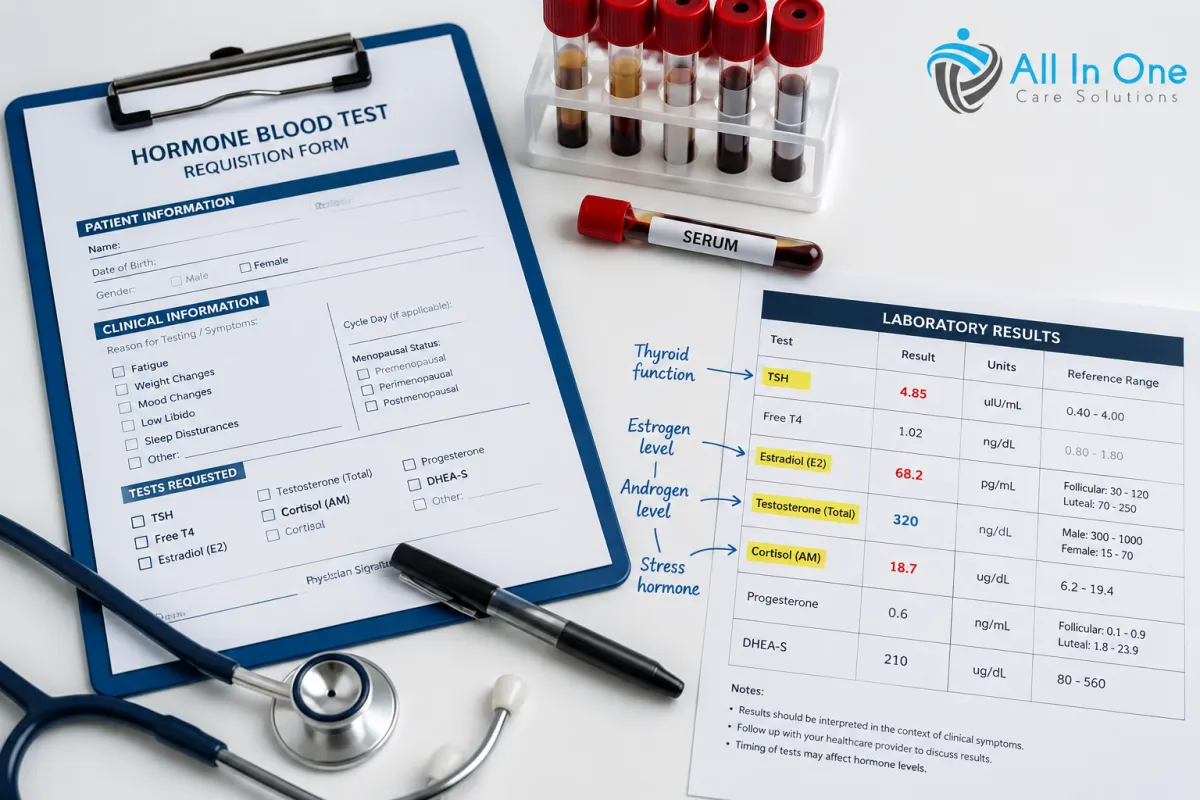
When Should You Get Your Hormones Checked?
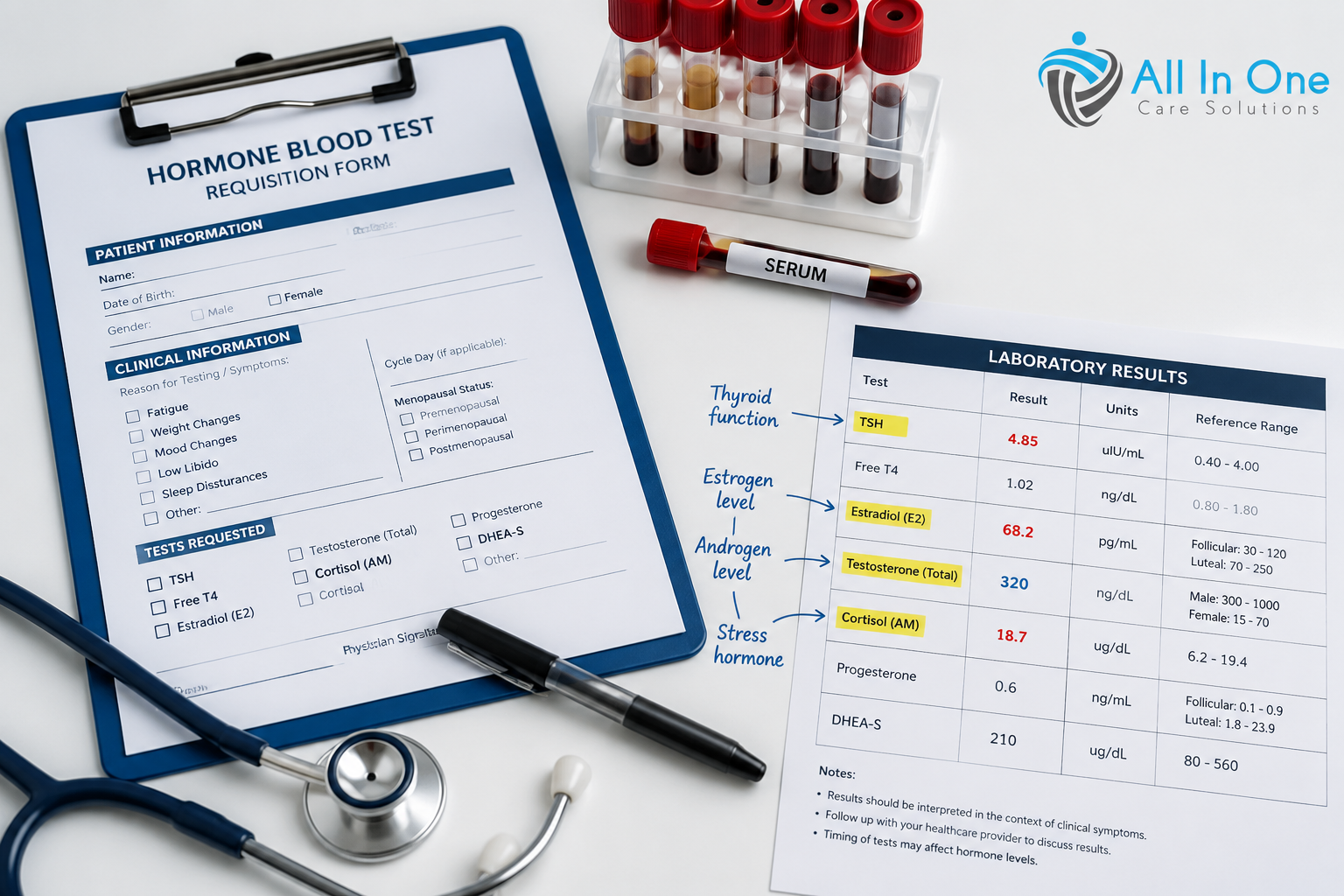
Last updated: July 2, 2026
Quick Answer: Adults should get their hormones checked when they experience persistent symptoms such as unexplained fatigue, weight changes, mood shifts, or irregular periods — and as a routine part of preventive care starting around age 30 to 35. Hormone testing is done through a simple blood draw at a medical clinic or laboratory, and results help guide treatment for conditions ranging from thyroid disease to low testosterone and menopause.
Key Takeaways
- Hormone imbalances often cause symptoms that are easy to overlook or attribute to stress, aging, or lifestyle — testing provides clarity.
- Adults over 30 should discuss hormone screening with their primary care physician, especially if symptoms are present.
- A full hormone panel typically includes thyroid hormones (TSH, T3, T4), sex hormones (estrogen, testosterone, progesterone), cortisol, and insulin-related markers.
- Most hormone blood tests do not require fasting, though some panels (particularly insulin and cortisol) may require specific timing.
- Self-pay hormone testing at a medical clinic in Miami Gardens is available and does not always require insurance.
- Waiting too long to test can allow conditions like hypothyroidism, low testosterone, or perimenopause to progress without treatment.
- Both men and women benefit from hormone panels as part of routine annual physical exams after age 35.
- A primary care physician or family medicine provider is the most appropriate starting point for hormone evaluation.
What Are the Signs You Need Hormone Testing?
Hormone imbalances rarely announce themselves with one dramatic symptom. More often, they show up as a cluster of vague complaints that persist for weeks or months despite adequate sleep, nutrition, and stress management.
The most common signs that warrant hormone testing include:
- Persistent fatigue that does not improve with rest
- Unexplained weight gain or difficulty losing weight, even with dietary changes
- Mood changes such as irritability, anxiety, or low mood without a clear cause
- Irregular or absent menstrual cycles in women
- Low libido in both men and women
- Hair thinning or hair loss
- Brain fog or difficulty concentrating
- Hot flashes or night sweats
- Dry skin, brittle nails, or cold intolerance (often thyroid-related)
- Muscle weakness or loss of muscle mass in men over 40
Any one of these symptoms alone may have multiple explanations. But when two or more appear together and persist, a hormone panel is a reasonable next step. At All In One Care Solutions, our primary care team in Miami Gardens evaluates these symptoms in context and orders the appropriate lab work.
What Age Should You Start Getting Hormone Levels Checked?
For most adults, hormone screening should begin between ages 30 and 35, even without symptoms. This is the age range when natural hormonal shifts begin — testosterone starts declining in men, and women may begin perimenopause as early as their mid-30s.
General age-based guidance:
| Age Range | Recommended Hormone Screening |
|---|---|
| 18–29 | Only if symptoms are present (e.g., PCOS, thyroid issues) |
| 30–35 | Baseline thyroid panel; discuss sex hormones with physician |
| 35–45 | Annual thyroid check; consider full hormone panel if symptomatic |
| 45–55 | Full panel recommended, especially for women approaching menopause |
| 55 and older | Ongoing monitoring; testosterone and thyroid are standard |
Medicare patients and seniors should note that hormone panels are often included in annual wellness visits. If you are a Medicare patient in the Miami Gardens area, ask your provider which hormone tests are covered under your plan.
How Often Should You Get Hormone Tests Done?
For most adults without a diagnosed hormone disorder, a hormone panel every one to two years is reasonable as part of routine preventive care. If a condition is already identified and being treated, testing frequency increases.
Frequency guidelines by situation:
- Healthy adults with no symptoms: Every 1–2 years, ideally as part of an annual physical exam
- Adults with a diagnosed thyroid condition: Every 6–12 months, or as directed by a physician
- Women in perimenopause or menopause: Every 6–12 months to guide treatment decisions
- Men on testosterone therapy: Every 3–6 months to monitor levels and adjust dosing
- Patients with diabetes or metabolic syndrome: At least annually, since insulin resistance affects hormone balance
- Patients on chronic medications (steroids, antidepressants, birth control): Discuss with your physician, as these can alter hormone levels
Scheduling a same-day appointment in Miami Gardens is one way to get tested quickly if symptoms are affecting daily life.
What Hormones Should Be Included in a Routine Blood Test?
A standard hormone panel covers the hormones most likely to affect energy, weight, mood, reproduction, and metabolism. Not every test is appropriate for every patient, so the panel is typically customized based on age, sex, and symptoms.
Core hormones commonly tested:
- TSH (Thyroid-Stimulating Hormone): The primary screening test for thyroid function
- Free T3 and Free T4: More detailed thyroid markers when TSH is abnormal
- Estradiol (Estrogen): Key for women’s reproductive health and bone density
- Progesterone: Evaluated in women with irregular cycles or fertility concerns
- Total and Free Testosterone: Relevant for both men (low T) and women (PCOS)
- DHEA-S: An adrenal hormone that declines with age
- Cortisol: The primary stress hormone; elevated or low levels affect energy and immunity
- FSH and LH: Pituitary hormones that regulate reproductive function
- Insulin and fasting glucose: Indirect markers of metabolic hormone balance
- IGF-1: A marker of growth hormone activity, relevant in older adults
A full panel does not need to be ordered at every visit. A primary care physician will determine which markers are clinically relevant based on the patient’s history and current symptoms.
What Is the Difference Between Checking Thyroid vs. a Full Hormone Panel?
A thyroid check and a full hormone panel are not the same thing. The thyroid test (TSH) is a single marker that screens for hypothyroidism or hyperthyroidism. A full hormone panel is a broader evaluation that includes sex hormones, adrenal hormones, and pituitary markers.
Thyroid-only test: Appropriate as a first-line screen for fatigue, weight gain, cold intolerance, or hair loss. Fast, low-cost, and widely covered by insurance.
Full hormone panel: Ordered when the thyroid test is normal but symptoms persist, or when the clinical picture suggests multiple hormone systems may be involved. This is more common in women approaching menopause, men with low libido or muscle loss, and patients with unexplained metabolic changes.
The practical rule: start with a TSH. If it is normal and symptoms continue, expand to a full panel. Your primary care physician at a family medicine clinic in Miami Gardens can guide this process based on your specific situation.
Should Men Get Hormone Tests as Part of Regular Checkups?
Yes. Men over 35 benefit from hormone testing as part of their routine annual physical exam, particularly for testosterone levels. Low testosterone (hypogonadism) affects a meaningful percentage of men over 40 and is often underdiagnosed because symptoms develop gradually.
Signs of low testosterone in men:
- Decreased energy and motivation
- Reduced muscle mass despite regular exercise
- Increased body fat, particularly around the abdomen
- Low sex drive
- Difficulty concentrating or mood changes
- Poor sleep quality
Testosterone testing is a simple blood draw, typically done in the morning when levels are at their peak. Men with diabetes, obesity, or hypertension are at higher risk for low testosterone and should be tested more proactively.
Patients managing chronic conditions such as diabetes or high blood pressure at our chronic disease management program in Miami Gardens are routinely evaluated for hormonal contributors to their condition.
What Symptoms Mean You Need Immediate Hormone Testing?
Most hormone imbalances develop slowly and do not require emergency evaluation. However, certain symptoms warrant prompt medical attention — not necessarily an emergency room, but a same-day or urgent care visit.
Symptoms that warrant prompt hormone evaluation:
- Sudden, significant weight loss or gain without dietary changes
- Severe fatigue that interferes with basic daily function
- Heart palpitations combined with heat intolerance (possible hyperthyroidism)
- Extreme cold intolerance, constipation, and swelling (possible hypothyroidism)
- Sudden cessation of menstrual periods in women under 40
- Severe mood changes, depression, or anxiety with no prior history
- Excessive thirst, frequent urination, and fatigue together (possible diabetes or adrenal issue)
These presentations should not be left to self-monitoring. A prompt visit to a primary care physician allows for same-day lab testing and faster answers.
Can You Test Hormones at Home or Do You Need a Lab?
At-home hormone test kits are commercially available and use saliva or dried blood spot samples. They can provide a general indication of hormone levels, but they have real limitations in clinical accuracy and are not a substitute for a physician-ordered blood test.
Comparison:
| Feature | At-Home Test Kit | Clinical Lab Test |
|---|---|---|
| Sample type | Saliva or finger-stick blood | Venous blood draw |
| Accuracy | Variable; not standardized | High; regulated standards |
| Physician review | Not included | Included with primary care visit |
| Insurance coverage | Rarely covered | Often covered |
| Follow-up care | None | Immediate treatment planning |
For patients in Miami Gardens, Hialeah, or Miami Lakes, in-house lab testing at All In One Care Solutions provides same-day results with direct physician review. This is a more reliable path than at-home kits, particularly for patients managing chronic conditions or seeking hormone therapy.
Is Hormone Testing Necessary If You Feel Fine?
Baseline hormone testing is still valuable even when a patient feels well, particularly after age 35. Some hormone imbalances — especially thyroid dysfunction and early testosterone decline — develop without obvious symptoms until they are moderately advanced.
Routine testing as part of an annual physical exam in Miami allows physicians to establish a personal baseline. This baseline becomes a reference point for future comparisons, making it easier to detect gradual changes before they cause significant symptoms.
The analogy is similar to cholesterol testing: most people with high cholesterol feel perfectly normal. The value of the test is in catching the problem early, not waiting for a cardiac event.
What Happens If You Wait Too Long to Get Hormones Checked?
Delaying hormone evaluation when symptoms are present can allow underlying conditions to progress and cause secondary health problems.
Consequences of delayed testing by condition:
- Untreated hypothyroidism: Can lead to weight gain, high cholesterol, cardiovascular risk, and in severe cases, myxedema
- Untreated low testosterone in men: Accelerates muscle loss, increases cardiovascular risk, and worsens insulin resistance
- Untreated estrogen decline in women: Accelerates bone density loss, increases cardiovascular risk, and worsens cognitive symptoms
- Untreated cortisol dysregulation: Contributes to chronic inflammation, metabolic dysfunction, and immune suppression
- Untreated insulin resistance: Progresses to type 2 diabetes if left unaddressed
For patients already managing diabetes or hypertension, hormonal imbalances can make those conditions harder to control. Early detection through routine lab testing is a core part of preventive care in Miami.
Do You Need to Fast Before a Hormone Blood Test?
Most hormone blood tests do not require fasting. However, there are exceptions depending on which hormones are being tested.
Fasting requirements by test:
- TSH, T3, T4 (thyroid): No fasting required
- Estradiol, progesterone, testosterone: No fasting required
- Cortisol: No fasting, but timing matters — morning draws (8–9 a.m.) are standard
- Insulin and fasting glucose: Fasting for 8–12 hours is required
- Comprehensive metabolic panel (if included): Fasting for 8–12 hours is recommended
When scheduling a hormone panel, confirm with the clinic whether any fasting or timing requirements apply. At All In One Care Solutions, the care team provides clear pre-test instructions to ensure accurate results.
Can You Get Hormone Testing Without a Doctor’s Referral?
In Florida, patients can access certain lab tests directly through a primary care clinic without a specialist referral. A primary care physician can order a full hormone panel during a routine visit, which is often more efficient and cost-effective than seeking a specialist first.
For patients without insurance, self-pay lab testing is available at our medical clinic in Miami Gardens. The annual physical exam package at $150 includes a basic blood panel and physician review, which can serve as a starting point for hormone evaluation.
Telehealth options are also available for initial consultations. Patients in the Miami area can connect with a provider through telemedicine services to discuss symptoms and determine which tests are appropriate before coming in for a blood draw.
How Much Does Hormone Testing Cost Without Insurance?
Hormone testing costs vary depending on which markers are ordered. In a clinical setting in South Florida, approximate self-pay costs are:
- TSH (thyroid screen): $25–$50
- Basic hormone panel (TSH + testosterone or estradiol): $75–$150
- Comprehensive hormone panel (full thyroid, sex hormones, cortisol, DHEA): $150–$350
- Annual physical with basic blood panel: Starting at $150 at All In One Care Solutions
These are general estimates. Actual pricing depends on the specific tests ordered and the clinic. Patients without insurance are encouraged to call (786) 446-9414 to ask about current self-pay pricing and available packages.
Which Doctors Specialize in Hormone Testing and Analysis?
A primary care physician or family medicine doctor is the appropriate first contact for hormone testing. They can order a full panel, interpret results in the context of the patient’s overall health, and refer to a specialist if needed.
When to see a specialist:
- Endocrinologist: For complex thyroid disorders, adrenal disease, or pituitary conditions
- OB-GYN or women’s health provider: For menopause management, PCOS, or reproductive hormone issues
- Urologist or men’s health specialist: For testosterone replacement therapy evaluation
- Primary care physician: For initial screening, routine monitoring, and coordination of care
For most patients in Miami Gardens, Miami Lakes, and Hialeah, starting with a primary care visit covers the majority of hormone-related concerns without the wait time associated with specialist referrals. The women’s health services at All In One Care Solutions include hormone evaluation as part of comprehensive well-woman care.
Frequently Asked Questions
Q: When should you get your hormones checked for the first time?
A: A first hormone check is reasonable between ages 30 and 35, or earlier if symptoms such as fatigue, irregular periods, or unexplained weight changes are present. A primary care physician can determine the right starting point.
Q: Can hormone imbalances cause weight gain?
A: Yes. Low thyroid function, low testosterone, elevated cortisol, and insulin resistance are all hormone-related conditions that contribute to weight gain or make weight loss difficult. Testing can identify these factors.
Q: Is a hormone panel covered by insurance?
A: Many hormone tests are covered when ordered by a physician for a documented clinical reason. Coverage varies by plan. Self-pay options are available for patients without insurance.
Q: How long does it take to get hormone test results?
A: In-house lab testing at a primary care clinic can provide results within the same day or within 24–48 hours. Results from external labs typically take 2–5 business days.
Q: Can stress affect hormone test results?
A: Yes. Cortisol levels in particular are sensitive to acute stress, illness, and sleep deprivation. Physicians account for this when interpreting results and may recommend repeat testing if results are unexpected.
Q: Do birth control pills affect hormone test results?
A: Yes. Oral contraceptives suppress natural estrogen and progesterone production and can alter testosterone levels. Patients should inform their physician about all medications before testing.
Q: Is hormone testing part of a standard annual physical exam?
A: A basic thyroid screen (TSH) is often included in routine annual blood work. A full hormone panel is not standard unless symptoms or risk factors are present, but it can be requested.
Q: Can hormone imbalances affect blood pressure or blood sugar?
A: Yes. Thyroid disorders, cortisol excess, and insulin resistance all have direct effects on blood pressure and glucose regulation. Patients with hypertension or diabetes may benefit from hormone evaluation as part of their chronic disease management.
Q: At what age do men need to start checking testosterone?
A: Men should consider baseline testosterone testing around age 35–40, or earlier if symptoms of low T are present. Annual monitoring is appropriate for men over 45.
Q: Can I get hormone testing done in Miami Gardens without a long wait?
A: Yes. All In One Care Solutions offers in-house lab testing with same-day or next-day results. Same-day appointments are available for patients who need prompt evaluation.
Conclusion
Knowing when to get your hormones checked is one of the most practical steps adults can take for their long-term health. Hormone imbalances are common, often subtle, and highly treatable when caught early. Whether symptoms are already present or a baseline evaluation is the goal, a primary care visit with in-house lab testing is the most efficient and accurate path forward.
Adults in Miami Gardens, Miami Lakes, and Hialeah have access to comprehensive hormone testing and preventive care at All In One Care Solutions. The clinic offers in-house lab work, same-day appointments, bilingual services in English and Spanish, and affordable self-pay options for patients without insurance.
Next steps:
- Call (786) 446-9414 to schedule a hormone evaluation or annual physical exam.
- Visit the clinic at 16191 NW 57 Ave, Miami Gardens, FL 33014.
- Book online at allinonecaresolutions.com for same-day or next-day availability.
Do not wait for symptoms to become severe. A single blood draw can provide answers that change the direction of your health.
Tags: hormone testing, when to check hormones, hormone panel blood test, thyroid testing, low testosterone symptoms, women’s hormone health, preventive care Miami, primary care Miami Gardens, annual physical exam Miami, lab testing Miami Gardens, hormone imbalance signs, family medicine Miami Gardens
References
- Bhasin, S., et al. “Testosterone Therapy in Men with Hypogonadism: An Endocrine Society Clinical Practice Guideline.” Journal of Clinical Endocrinology & Metabolism, 2018.
- Garber, J.R., et al. “Clinical Practice Guidelines for Hypothyroidism in Adults.” Thyroid, 2012.
- The Menopause Society (formerly NAMS). “Hormone Therapy Position Statement.” 2022.
- American Diabetes Association. “Standards of Medical Care in Diabetes.” Diabetes Care, 2023.
- U.S. Preventive Services Task Force. “Screening for Thyroid Dysfunction.” 2015.
