What Happens During an Annual Physical?
Last updated: July 2, 2026
Quick Answer: An annual physical is a comprehensive head-to-toe medical evaluation conducted by a primary care physician. It typically includes a review of your medical history, vital signs measurement, a physical examination, laboratory blood work, and an EKG in some cases. The visit usually takes 30 to 60 minutes and is designed to detect health problems early, manage existing conditions, and keep you on track with preventive care.
Key Takeaways
- An annual physical exam covers your medical history, vital signs, physical examination, and lab testing.
- Most visits take between 30 and 60 minutes, depending on your age and health history.
- Common blood tests include a complete blood count, metabolic panel, lipid panel, and blood glucose levels.
- Fasting for 8 to 12 hours before your appointment is recommended if blood work is ordered.
- You cannot “fail” an annual physical — it is a health assessment, not a pass/fail test.
- Abnormal findings are followed up with additional testing or specialist referrals, not immediate alarm.
- An annual physical differs from a Medicare Annual Wellness Visit in scope and billing.
- Self-pay annual physicals in Miami Gardens are available starting at $150 at All In One Care Solutions, including an EKG and basic blood panel.
- Adults with chronic conditions such as diabetes, hypertension, or high cholesterol benefit most from yearly exams.
- Bring your medication list, insurance card, and any prior lab results to your appointment.
What Is Included in an Annual Physical Exam?
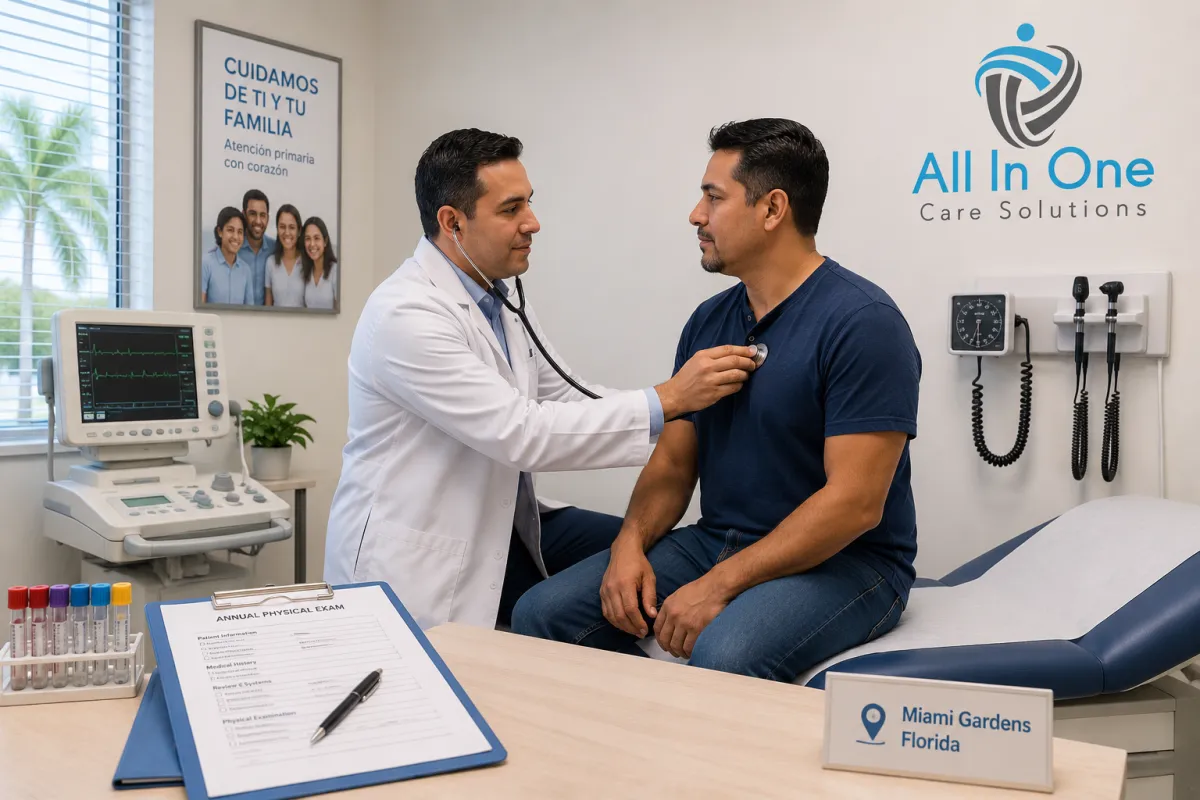
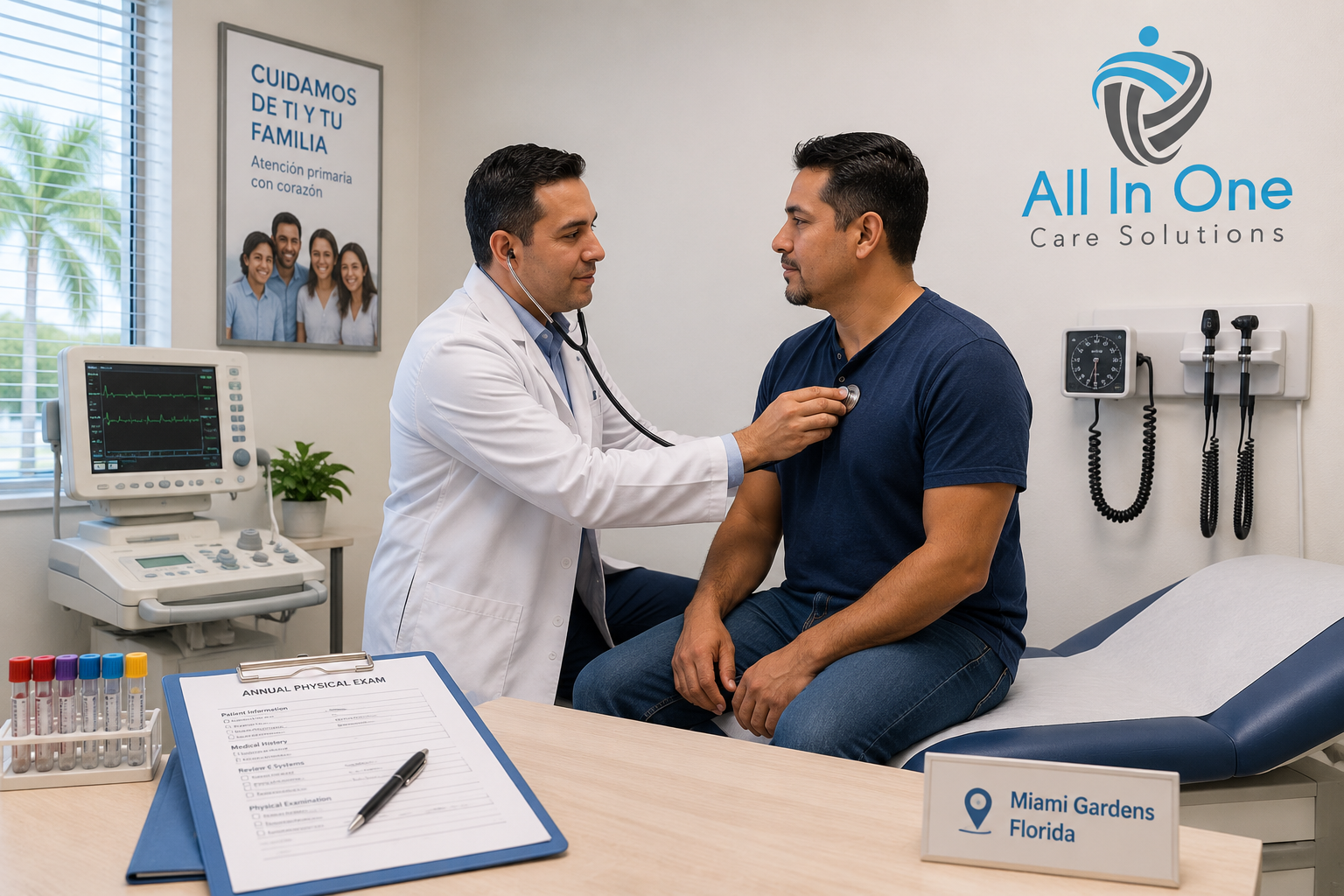
An annual physical exam covers several key components: a medical and family history review, vital signs, a full-body physical examination, and laboratory testing. The exact components vary by age, sex, and health history, but the core structure is consistent across most primary care settings.
Here is what a standard annual physical exam includes:
Medical History Review
- Current medications, supplements, and allergies
- Family history of heart disease, diabetes, cancer, or other hereditary conditions
- Recent symptoms, hospitalizations, or surgeries
- Lifestyle factors: smoking, alcohol use, diet, exercise habits, and sleep patterns
Vital Signs
- Blood pressure
- Heart rate and rhythm
- Respiratory rate
- Body temperature
- Height, weight, and body mass index (BMI)
- Oxygen saturation (in many clinics)
Head-to-Toe Physical Examination
- Eyes, ears, nose, and throat
- Neck (lymph nodes and thyroid gland)
- Heart and lung auscultation with a stethoscope
- Abdominal palpation (checking liver, spleen, and bowel sounds)
- Skin inspection for unusual lesions or changes
- Neurological reflexes and coordination
- Musculoskeletal assessment
Preventive Screenings and Immunizations
- Age-appropriate cancer screenings (colorectal, cervical, breast, prostate)
- Vaccination status review
- Depression and anxiety screening
- Sexually transmitted infection (STI) risk assessment
Laboratory Work
Blood work is typically ordered at or before the visit. See the dedicated section below for details.
For a detailed checklist of what to expect, review the annual physical exam complete checklist from All In One Care Solutions.
What Blood Tests Are Done During a Physical?
Standard blood tests ordered during an annual physical exam include a complete blood count (CBC), a comprehensive metabolic panel (CMP), a lipid panel, and a fasting blood glucose or HbA1c test. Additional panels may be ordered based on age, symptoms, or risk factors.
Standard Blood Panel Components
| Test | What It Measures |
|---|---|
| Complete Blood Count (CBC) | Red blood cells, white blood cells, platelets — screens for anemia and infection |
| Comprehensive Metabolic Panel | Kidney function, liver enzymes, electrolytes, blood sugar |
| Lipid Panel | Total cholesterol, LDL, HDL, and triglycerides |
| Fasting Glucose / HbA1c | Blood sugar levels and diabetes risk |
| Thyroid-Stimulating Hormone (TSH) | Thyroid function (often added for adults 40 and older) |
Additional tests commonly ordered for specific populations:
- Vitamin B12 and D levels for patients with fatigue or absorption concerns
- Hormone panels (testosterone, estrogen) for adults experiencing hormonal symptoms
- STD/STI panels for sexually active adults
- PSA (prostate-specific antigen) for men over 50
All In One Care Solutions offers in-house lab testing in Miami Gardens, which means results are processed quickly and reviewed directly by your primary care physician.
Do I Need to Fast Before My Annual Physical?
Yes, fasting for 8 to 12 hours before your annual physical is generally recommended if blood work is included, particularly for accurate lipid panel and blood glucose results. Water is permitted during the fasting period. Coffee, juice, and food should be avoided.
When fasting matters most:
- Lipid panels (cholesterol testing) require fasting for accurate LDL calculations
- Fasting glucose and HbA1c tests are more reliable without recent food intake
- Comprehensive metabolic panels can be affected by recent meals
When fasting is less critical:
- If your physical does not include blood work
- If only a CBC is ordered (though fasting is still generally recommended)
Confirm with the clinic when scheduling whether fasting is required for your specific visit. At All In One Care Solutions, staff will advise you on preparation when you book your annual physical exam in Miami Gardens.
How Long Does an Annual Physical Take?
A standard annual physical exam takes between 30 and 60 minutes for most adults. New patients, seniors, or patients with multiple chronic conditions may need 60 to 90 minutes to allow adequate time for history review and examination.
Factors that affect visit length:
- Number of chronic conditions being managed (diabetes, hypertension, high cholesterol)
- Whether an EKG is performed on-site
- How many concerns or questions the patient brings to the visit
- Whether it is a new patient or established patient appointment
Arriving 10 to 15 minutes early to complete intake paperwork helps keep the visit on schedule. Patients who prefer a more efficient option can also explore telemedicine services for certain follow-up needs after an in-person physical.
What Should I Bring to My Annual Physical Appointment?
Bring a current list of all medications and supplements, your insurance card, a valid photo ID, and any recent lab results or medical records. For new patients, prior physician notes and specialist records are especially helpful.
Complete preparation checklist:
- Photo ID and insurance card (or self-pay confirmation)
- List of all current medications, dosages, and frequencies
- List of vitamins, supplements, and over-the-counter products
- Names and contact information for any specialists you see
- Recent lab results, imaging reports, or hospital discharge summaries
- A written list of symptoms or concerns you want to discuss
- Vaccination records if available
Patients in Miami Gardens and Hialeah who are uninsured can review self-pay physical exam options in Miami before their visit to understand pricing and what is included.
Why Is an Annual Physical Important?
An annual physical is one of the most effective tools in preventive medicine. It allows a physician to identify risk factors and early-stage conditions before symptoms appear, which significantly improves treatment outcomes and reduces long-term healthcare costs.
Conditions commonly detected during a routine physical:
- Hypertension (high blood pressure) — often called the “silent killer” because it produces no symptoms until damage has occurred
- Prediabetes and Type 2 diabetes
- High cholesterol and cardiovascular risk
- Thyroid dysfunction
- Anemia
- Early-stage kidney disease
- Skin abnormalities that may require further evaluation
For patients managing ongoing conditions, the annual physical also serves as a structured checkpoint for chronic disease management in Miami. Medication adjustments, specialist referrals, and updated care plans are all addressed during this visit.
Adults in South Florida communities, including Miami Gardens, Miami Lakes, and Hialeah, face elevated rates of diabetes and hypertension compared to national averages. Regular preventive care is not optional for this population — it is essential.
What Happens If Something Abnormal Is Found During a Physical?
If an abnormal finding is identified, the physician will explain the result, order confirmatory or additional testing, and outline next steps. Most abnormal findings do not represent an emergency — they represent an opportunity to intervene early.
Common follow-up steps after an abnormal finding:
- Repeat blood work to confirm results (some values fluctuate day to day)
- Referral to a specialist (cardiologist, endocrinologist, or dermatologist)
- Imaging studies such as ultrasound or X-ray
- Medication initiation or adjustment
- Lifestyle modification guidance with a follow-up appointment scheduled
For example, a slightly elevated fasting glucose may prompt a repeat HbA1c test and a referral to a diabetes management program. Patients in Miami Gardens can access diabetes care and management services directly through All In One Care Solutions without needing a separate specialist referral for initial management.
Abnormal Pap smear results follow a similar structured process. For more on that specific scenario, see what happens after an abnormal Pap smear.
Can You Fail an Annual Physical?
No. An annual physical is not a test with a passing or failing grade. It is a health assessment designed to gather information about your current health status and identify areas that need attention.
The goal of the exam is not to judge your health but to give your physician a complete picture so they can offer the best guidance possible. Whether results come back normal or reveal areas of concern, the outcome of a physical is always actionable information — never a verdict.
Patients who have not seen a doctor in years sometimes avoid physicals out of fear of bad news. This is understandable, but early detection consistently leads to better outcomes than delayed diagnosis.
What Is the Difference Between an Annual Physical and a Wellness Visit?
An annual physical exam and a Medicare Annual Wellness Visit (AWV) are different in scope and billing. A traditional annual physical includes a hands-on physical examination and may involve cost-sharing depending on your insurance. A Medicare AWV focuses on preventive planning, health risk assessments, and screenings — but does not include a full physical examination and is covered at no cost under Medicare Part B.
Key differences at a glance:
| Feature | Annual Physical | Medicare Annual Wellness Visit |
|---|---|---|
| Physical examination | Yes | No (health risk assessment only) |
| Lab work ordered | Yes | Not automatically included |
| Cost under Medicare | May involve copay | Covered 100% under Part B |
| Focus | Diagnosis and prevention | Preventive planning |
| Who it’s for | All adults | Medicare beneficiaries only |
For a deeper comparison, see annual physical exam vs. well-woman exam in Miami Gardens, which outlines how these visit types differ for women specifically.
How Often Should You Get an Annual Physical?
Most adults should have a comprehensive physical exam once per year. However, frequency may increase based on age, chronic conditions, and individual risk factors.
General guidelines by age and risk:
- Adults 18 to 39 with no chronic conditions: once every 1 to 3 years is often sufficient, though annual visits are recommended for preventive benefit
- Adults 40 and older: annually
- Patients with diabetes, hypertension, or high cholesterol: at minimum annually, often with additional follow-up visits
- Medicare patients: an Annual Wellness Visit is covered once per year; a separate physical may also be warranted
If you have not had a physical in several years, starting with a comprehensive exam is the appropriate first step regardless of age.
What If I Haven’t Had a Physical in Years?
If you have not had a physical in several years, schedule one as soon as possible. The exam will take longer than a routine annual visit because your physician will need to establish a complete health baseline. Expect a thorough history review, full physical examination, and a broader panel of lab work.
There is no penalty for a gap in care. Physicians understand that barriers such as lack of insurance, cost concerns, and limited access to bilingual providers keep many patients away. What matters is returning to care now.
Patients in South Florida who have been uninsured or underinsured can access affordable options. All In One Care Solutions offers a comprehensive annual physical exam for $150 — including a physician visit, EKG, and basic blood panel — with no insurance required. More information is available on the annual physical exam page.
Do Annual Physicals Hurt?
An annual physical is generally painless. The examination itself — listening to your heart and lungs, palpating the abdomen, checking reflexes — involves no discomfort for most patients. Blood draws may cause brief, mild discomfort at the venipuncture site.
What to expect in terms of discomfort:
- Blood pressure cuff: brief squeezing sensation
- Blood draw: a quick pinch lasting a few seconds
- Abdominal palpation: mild pressure, not pain
- EKG: completely painless — electrodes are placed on the skin and removed without discomfort
Patients who are anxious about medical visits should communicate this to the front desk when scheduling. Bilingual staff at All In One Care Solutions are trained to provide a calm, patient-centered experience for both English- and Spanish-speaking patients.
How Much Does an Annual Physical Cost Without Insurance?
The cost of an annual physical without insurance typically ranges from $100 to $300 at primary care clinics, depending on what is included. Costs rise when additional lab work, EKGs, or specialist consultations are added.
Cost breakdown for self-pay patients:
| Service | Typical Self-Pay Range |
|---|---|
| Physician visit only | $75 – $150 |
| Basic blood panel | $50 – $150 |
| EKG | $50 – $100 |
| Comprehensive physical (all-inclusive) | $150 – $300 |
At All In One Care Solutions in Miami Gardens, the all-inclusive annual physical — covering the physician visit, EKG, and basic blood panel — is available for $150. This is one of the most affordable options for preventive care in the Miami area. Patients can also explore payment plan options through Cherry or CareCredit for additional services.
For a detailed breakdown of self-pay options, visit the best self-pay physical exam in Miami page.
What Questions Will the Doctor Ask During a Physical?
During an annual physical, the physician will ask structured questions covering your current health, medical history, family history, and lifestyle. These questions are not meant to judge — they are the clinical foundation for building an accurate health picture.
Common questions to expect:
- Do you have any new or ongoing symptoms (pain, fatigue, shortness of breath, changes in weight)?
- What medications and supplements are you currently taking?
- Do you have a family history of heart disease, diabetes, or cancer?
- How would you describe your diet and physical activity level?
- Do you smoke, drink alcohol, or use recreational substances?
- How is your sleep quality? Do you experience stress or anxiety?
- Are you up to date on vaccinations?
- For women: last menstrual period, contraception use, and mammogram or Pap smear history
- For men: any urinary symptoms, sexual health concerns, or prostate screening history
Being honest with your physician, even about sensitive topics, leads to better care. Primary care physicians in family medicine settings are trained to discuss these topics without judgment.
Frequently Asked Questions
Q: Can I request specific lab tests during my annual physical?
Yes. You can ask your physician to add tests such as vitamin D, B12, hormone panels, or STD screenings. Some additional tests may carry an extra cost, particularly for self-pay patients.
Q: Is an annual physical the same as a sick visit?
No. A sick visit addresses a specific illness or symptom. An annual physical is a scheduled preventive exam for patients who feel well. Billing codes and insurance coverage differ between the two.
Q: Will my insurance cover my annual physical?
Most private insurance plans and Medicare cover annual preventive visits at no cost to the patient. However, if you raise new medical concerns during the visit, the appointment may be billed as a diagnostic visit and subject to a copay. Confirm coverage with your insurer before your appointment.
Q: Can I get an annual physical if I have no symptoms?
Yes — and this is exactly the point. Annual physicals are designed for patients who feel healthy. Many serious conditions, including hypertension and prediabetes, produce no noticeable symptoms in early stages.
Q: What is an EKG and why is it done during a physical?
An electrocardiogram (EKG) records the electrical activity of the heart. It is used to detect irregular heart rhythms, signs of prior heart attacks, and other cardiac abnormalities. It is painless and takes about 5 minutes.
Q: Do I need to undress for a physical exam?
Partially. You will typically be asked to change into a medical gown so the physician can examine your back, abdomen, and chest. Modesty is respected throughout the visit.
Q: Can children and teenagers get an annual physical at All In One Care Solutions?
Yes. All In One Care Solutions offers family practice services for patients ages 12 and up, including annual physical exams for adolescents and adults.
Q: How do I prepare my medical history before the visit?
Write down your current medications with dosages, any surgeries or hospitalizations in the past 5 years, known allergies, and a list of first-degree relatives with serious health conditions. Bring this list to the appointment.
Q: What if I need a referral to a specialist after my physical?
Your primary care physician can issue referrals during or after the visit. All In One Care Solutions coordinates care with specialists and can help navigate the referral process for both insured and self-pay patients.
Q: Is the annual physical available in Spanish?
Yes. All In One Care Solutions is a fully bilingual clinic. All services, including annual physical exams, are available in both English and Spanish. Staff and providers communicate comfortably in both languages.
Conclusion
An annual physical exam is one of the most straightforward and effective steps any adult can take to protect their long-term health. It takes less than an hour, covers the full picture of your current health status, and gives your physician the information needed to catch problems early — before they become serious.
For adults in Miami Gardens, Miami Lakes, and Hialeah managing conditions like diabetes, high blood pressure, or high cholesterol, the annual physical is not just recommended — it is a clinical necessity. And for those who have been without a doctor or insurance, affordable options exist right in the community.
All In One Care Solutions, located at 16191 NW 57 Ave in Miami Gardens, offers a comprehensive annual physical exam for $150, including a physician visit, EKG, and basic blood panel. No insurance is required. The clinic accepts most major insurance plans and provides bilingual care for English- and Spanish-speaking patients.
To schedule your annual physical exam in Miami Gardens, call (786) 446-9414 or book online at allinonecaresolutions.com.
References
- U.S. Preventive Services Task Force. Recommendations for Primary Care Practice. https://www.uspreventiveservicestaskforce.org (accessed 2026)
- Centers for Medicare & Medicaid Services. Medicare Preventive Services: Annual Wellness Visit. https://www.cms.gov (2023)
- American Academy of Family Physicians. Periodic Health Examination. https://www.aafp.org (2022)
- American Heart Association. Understanding Blood Pressure Readings. https://www.heart.org (2023)
- American Diabetes Association. Standards of Medical Care in Diabetes. Diabetes Care, Vol. 47, Supplement 1 (2024)
- National Heart, Lung, and Blood Institute. Blood Cholesterol: Diagnosis. https://www.nhlbi.nih.gov (2022)
Tags: annual physical exam, preventive care Miami, primary care Miami Gardens, annual physical exam Miami, lab testing Miami, family medicine Miami Gardens, chronic disease management Miami, blood tests during physical, self-pay physical exam, medical clinic Miami Gardens, annual wellness visit, preventive health screening
