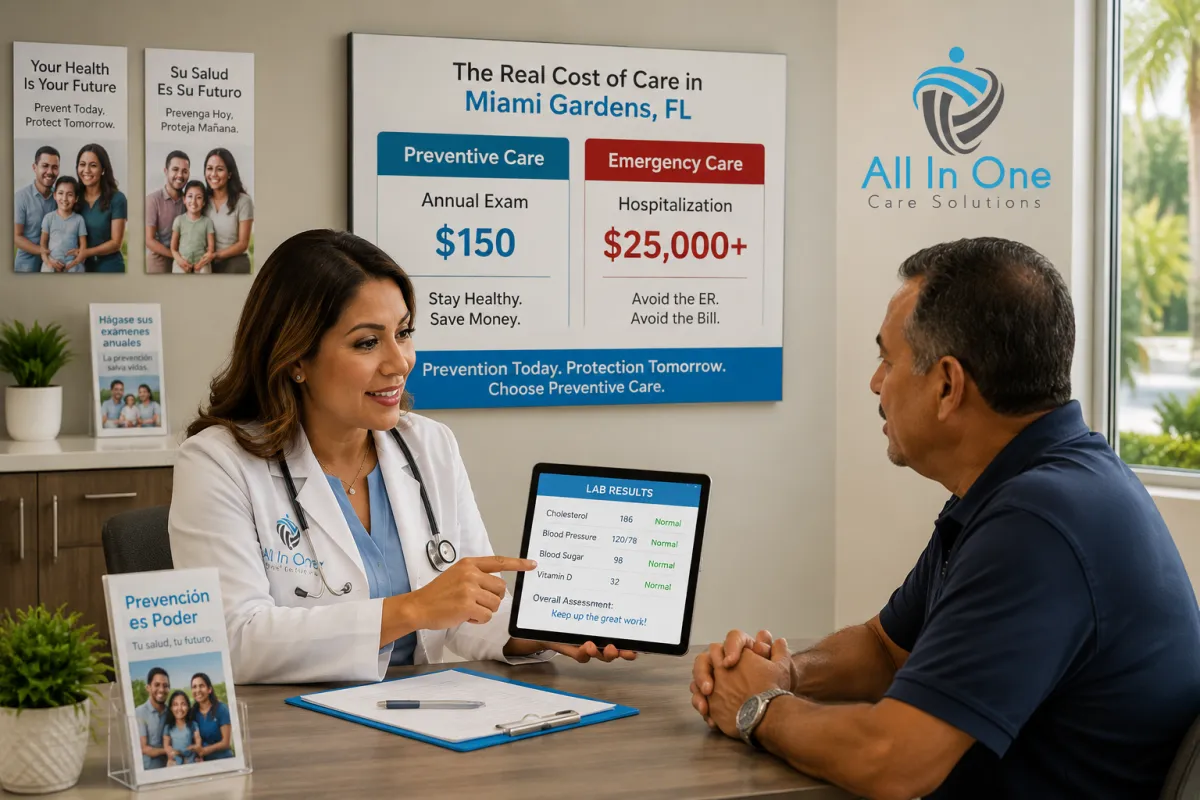
Why Preventive Care Saves Money
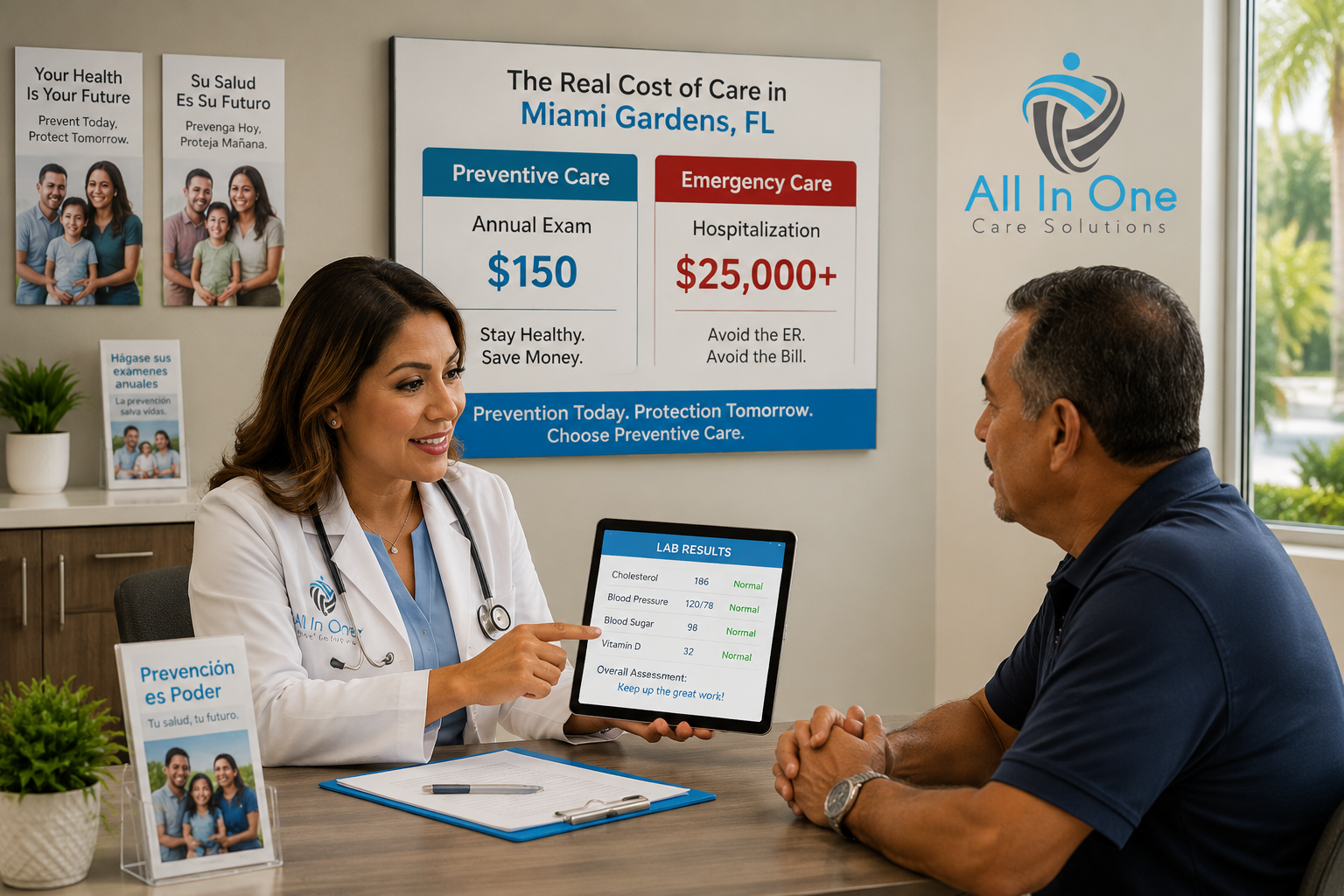
Last updated: July 2, 2026
Quick Answer: Preventive care saves money by catching health problems early, when they are far less expensive to treat. Routine checkups, screenings, and lab work can identify conditions like diabetes, hypertension, and high cholesterol before they progress into costly hospitalizations or specialist care. For patients in Miami Gardens and surrounding communities, consistent preventive care is one of the most financially sound health decisions available.
Key Takeaways
- Treating a chronic disease in its early stages costs significantly less than managing advanced complications.
- Annual physical exams, blood panels, and screenings are among the most cost-effective tools in medicine.
- Most insurance plans, including Medicare, cover preventive services at no out-of-pocket cost to the patient.
- Uninsured patients can access affordable preventive exams, such as the $150 annual physical at All In One Care Solutions.
- Skipping preventive visits often leads to emergency room visits, which are among the most expensive medical encounters.
- Preventive care applies to every age group, though the specific screenings recommended change with age.
- Chronic conditions like diabetes and hypertension are largely manageable when detected early through routine care.
- Young, healthy adults benefit from preventive care because many serious conditions develop silently before symptoms appear.
What Is Preventive Care and Why Does It Matter
Preventive care refers to medical services designed to detect, prevent, or reduce the risk of disease before symptoms develop. It includes annual physical exams, routine blood work, blood pressure checks, cancer screenings, immunizations, and counseling on lifestyle factors like weight and nutrition.
It matters because most serious and costly medical conditions do not appear suddenly. Conditions like type 2 diabetes, hypertension, and high cholesterol develop gradually over months or years. Preventive care creates the opportunity to identify these conditions at a stage when lifestyle changes and low-cost medications can still reverse or control them.
For families in Miami Gardens, Miami Lakes, and Hialeah, access to consistent primary care services in Miami Gardens is the foundation of long-term health and financial stability.
How Much Money Can Preventive Care Actually Save You
Preventive care saves money in measurable, documented ways. The U.S. Centers for Disease Control and Prevention (CDC) has reported that chronic diseases account for approximately 90% of the nation’s $4.1 trillion in annual healthcare expenditures, and most of these conditions are preventable or manageable with early intervention (CDC, 2023).
To understand the financial impact at the individual level, consider these comparisons:
| Service | Approximate Cost |
|---|---|
| Annual physical exam (self-pay) | $150 at All In One Care Solutions |
| Basic blood panel (in-house lab) | Included in annual exam package |
| Emergency room visit (average) | $1,500 to $3,000+ |
| Hospitalization for uncontrolled diabetes | $10,000 to $30,000+ |
| Dialysis (end-stage kidney disease) | $90,000+ per year |
| Stroke rehabilitation | $20,000 to $100,000+ |
The math is straightforward. A $150 annual exam that catches prediabetes early can prevent years of insulin therapy, specialist visits, and potential hospitalization. That is why preventive care saves money at both the individual and system-wide level.
Preventive Care vs. Reactive Treatment: A Cost Comparison
Preventive care is proactive. Reactive treatment responds to a condition after it has already caused damage. The cost difference between these two approaches is substantial.
Consider a patient with undetected high blood pressure. Left untreated, hypertension significantly increases the risk of heart attack and stroke. A single cardiac event can result in emergency surgery, ICU admission, and months of rehabilitation. The total cost can easily exceed $100,000. In contrast, managing blood pressure with routine monitoring and medication typically costs a few hundred dollars per year.
The same principle applies to:
- Diabetes: Early detection through a fasting glucose test costs very little. Managing diabetic complications, including nerve damage, kidney disease, and vision loss, can cost tens of thousands annually.
- High cholesterol: A lipid panel costs a fraction of the treatment for a heart attack caused by untreated hyperlipidemia.
- Cancer: Many cancers caught at Stage 1 have treatment costs and survival rates dramatically better than those caught at Stage 3 or 4.
Patients managing these conditions can learn more about structured support through chronic disease management in Miami Gardens and diabetes care in Miami Gardens.
What Preventive Care Does Insurance Typically Cover
Most insurance plans cover a defined set of preventive services at no cost to the patient when delivered by an in-network provider. This applies to plans regulated under the Affordable Care Act (ACA) and to Medicare.
Under most ACA-compliant private insurance plans, covered preventive services include:
- Annual wellness visits and physical exams
- Blood pressure screening
- Cholesterol (lipid) screening
- Blood glucose and diabetes screening
- Body mass index (BMI) assessment
- Depression screening
- Cervical cancer screening (Pap smear)
- Colorectal cancer screening
- Immunizations (flu, pneumonia, hepatitis B, and others)
- Mammograms (for women 40 and older, per plan guidelines)
Under Medicare, covered preventive services include:
- Annual Wellness Visit (AWV)
- Welcome to Medicare preventive visit (one-time)
- Cardiovascular disease screenings
- Diabetes screenings
- Bone density measurements
- Various cancer screenings
The key detail: these services are covered at $0 cost-sharing only when billed as preventive. If the visit shifts to diagnosing a new condition, cost-sharing may apply. Patients should confirm coverage details with their insurer before each visit.
What Preventive Screenings Are Free Under Insurance Plans
Several specific screenings are covered at no cost under most insurance plans in 2026. These are based on recommendations from the U.S. Preventive Services Task Force (USPSTF), which sets the clinical standards insurers are required to follow under federal law.
Zero-cost screenings typically covered include:
- Blood pressure measurement (all adults)
- Lipid panel for adults at cardiovascular risk
- Fasting blood glucose or HbA1c for adults 35 to 70 who are overweight
- Colorectal cancer screening starting at age 45
- Lung cancer screening (low-dose CT) for adults 50 to 80 with a significant smoking history
- Breast cancer screening (mammogram) for women 40 and older
- Cervical cancer screening (Pap smear) for women 21 to 65
- Osteoporosis screening for women 65 and older
- Depression screening for all adults
- Alcohol misuse screening and counseling
Patients who are uninsured or underinsured should ask about self-pay pricing. At All In One Care Solutions, a comprehensive annual exam including EKG and basic blood panel is available for $150, with no insurance required.
How Often Should You Get Preventive Checkups
For most healthy adults, an annual physical exam is the standard recommendation. However, the frequency of specific screenings depends on age, sex, family history, and existing health conditions.
General guidelines by life stage:
- Adults 30 to 39: Annual exam, blood pressure check, cholesterol panel if risk factors are present, blood glucose if overweight or family history of diabetes.
- Adults 40 to 49: Annual exam, lipid panel, blood glucose, EKG if indicated, cancer screenings begin (colorectal at 45, mammogram at 40 for women).
- Adults 50 to 64: All of the above plus more frequent colorectal screening, lung cancer screening if applicable, bone density for women approaching menopause.
- Adults 65 and older (Medicare patients): Annual Wellness Visit, full preventive panel, fall risk assessment, cognitive evaluation, osteoporosis screening.
Patients with chronic conditions such as diabetes or hypertension should see their primary care provider more frequently, typically every 3 to 6 months, to monitor lab values and adjust treatment as needed.
Does Preventive Care Really Prevent Serious Diseases
Yes, with important context. Preventive care does not guarantee that a disease will never develop, but it significantly reduces the likelihood of severe outcomes and detects conditions early enough to change their course.
The evidence is well-established:
- Identifying and treating prediabetes through lifestyle counseling can prevent or delay the onset of type 2 diabetes in a large proportion of at-risk individuals, according to the CDC’s Diabetes Prevention Program research.
- Blood pressure control through early detection and treatment reduces the risk of stroke and heart attack substantially.
- Colorectal cancer caught at Stage 1 has a five-year survival rate above 90%, compared to roughly 15% when caught at Stage 4 (American Cancer Society, 2023).
Preventive care works best when it is consistent. A single visit every few years is far less effective than a structured annual relationship with a primary care provider who tracks changes over time.
What Happens If You Skip Preventive Care Appointments
Skipping preventive care does not mean nothing happens. It means that developing conditions go undetected until symptoms appear, and symptoms often appear only after significant damage has occurred.
Common consequences of skipping preventive visits:
- Hypertension goes undiagnosed for years, silently damaging the heart, kidneys, and blood vessels.
- Prediabetes progresses to type 2 diabetes without the lifestyle intervention window.
- High cholesterol builds arterial plaque undetected until a cardiac event occurs.
- Early-stage cancers that are highly treatable are missed until they become advanced.
- Patients end up in urgent care or emergency rooms for conditions that could have been managed in a routine office visit.
Emergency and urgent care visits are also far more expensive than scheduled preventive appointments. For patients in the Miami Gardens area, same-day doctor appointments are available for acute concerns, but they should not replace the annual preventive exam.
Is Preventive Care Worth It If You Are Young and Healthy
Yes. This is one of the most common misconceptions in primary care. Many serious conditions begin developing in the 20s and 30s without producing any symptoms. Hypertension, high cholesterol, and prediabetes are frequently diagnosed in patients who feel completely well.
Additionally, a young adult who establishes care with a primary care physician builds a baseline medical record. This baseline makes it easier to detect meaningful changes in future lab values, blood pressure readings, or body weight. Without that baseline, a physician has no point of comparison.
Young adults also benefit from preventive counseling on:
- Weight management before obesity-related conditions develop
- Reproductive and hormonal health
- Mental health screening and early support
- Immunization updates
For young women especially, annual well-woman exams provide cervical cancer screening, breast exams, and hormonal health evaluation. More information is available through women’s health primary care in Miami Gardens.
Preventive Care for Different Age Groups: What Is Recommended
Preventive care is not one-size-fits-all. The screenings and services recommended change based on age, sex, and personal risk factors.
Ages 30 to 39:
- Annual physical exam
- Blood pressure and cholesterol check
- Blood glucose if overweight or family history present
- STI screening as appropriate
- Mental health screening
Ages 40 to 49:
- All of the above
- EKG for cardiovascular baseline
- Mammogram for women (starting at 40)
- Colorectal cancer screening discussion (starting at 45)
- Thyroid function if symptomatic
Ages 50 to 64:
- Full annual exam with comprehensive lab panel
- Colonoscopy or alternative colorectal screening
- Lung cancer screening (if smoking history qualifies)
- Bone density for women nearing or in menopause
- Expanded cardiovascular risk assessment
Ages 65 and older (Medicare patients):
- Medicare Annual Wellness Visit
- Cognitive assessment
- Fall risk evaluation
- Osteoporosis screening
- Vision and hearing screening referrals
Patients managing blood pressure concerns can access structured blood pressure care in Miami Gardens as part of a comprehensive preventive plan.
Preventive Care for People Without Health Insurance
Lack of insurance is not a reason to skip preventive care. Uninsured patients have several practical options for accessing affordable preventive services in South Florida.
Options for uninsured patients in Miami Gardens and surrounding areas:
- Self-pay annual exams: All In One Care Solutions offers a comprehensive annual exam including a doctor visit, EKG, and basic blood panel for $150, with no insurance required.
- In-house lab testing: On-site laboratory services allow patients to get blood work done at the clinic without the added cost of an outside lab.
- Community health programs: Federally Qualified Health Centers (FQHCs) offer sliding-scale fees based on income.
- Marketplace plans: ACA marketplace plans offer preventive services at no cost-sharing once enrolled.
The most important step for uninsured patients is to not delay care until a condition becomes an emergency. A $150 preventive exam is a fraction of the cost of an unplanned ER visit for an unmanaged chronic condition.
Can Preventive Care Help With Chronic Disease Management
Preventive care and chronic disease management are closely connected. Preventive care identifies risk factors and early-stage disease. Chronic disease management then provides the ongoing monitoring and treatment needed to keep those conditions controlled and prevent complications.
For patients already diagnosed with diabetes, hypertension, or high cholesterol, regular primary care visits serve a preventive function at a different level: they prevent the condition from progressing to its most severe and costly stages.
What chronic disease management through preventive visits includes:
- Regular HbA1c testing for diabetes patients
- Blood pressure monitoring and medication adjustment for hypertension
- Lipid panels to track cholesterol response to treatment
- Kidney function tests for patients on long-term medications
- Foot and eye exam referrals for diabetic patients
- Nutritional and lifestyle counseling
Patients in Miami Gardens, Miami Lakes, and Hialeah managing chronic conditions can access coordinated care through comprehensive medical exams in Miami Gardens and dedicated chronic disease support at the clinic.
Common Preventive Care Mistakes People Make
Even patients who intend to stay on top of their health make avoidable errors. Knowing these mistakes helps patients get more value from their preventive care visits.
Mistake 1: Treating the annual exam as a sick visit. Annual wellness exams are designed for prevention and screening, not for diagnosing new symptoms. Bringing up a new complaint during a preventive visit may shift the billing to a diagnostic visit, which can trigger cost-sharing.
Mistake 2: Skipping labs because they feel fine. Many conditions produce no symptoms until they are advanced. Blood work is the only reliable way to detect issues like high cholesterol, elevated blood sugar, or thyroid dysfunction.
Mistake 3: Waiting until something is “bad enough” to see a doctor. This is the most costly mistake. Early-stage conditions are far easier and cheaper to treat than advanced ones.
Mistake 4: Not disclosing family history. Family history changes which screenings are recommended and at what age they should begin. Patients should provide a complete family history at their first visit and update it regularly.
Mistake 5: Assuming preventive care is only for older adults. As discussed, many conditions begin developing silently in younger adults. Preventive care is relevant starting in the 20s.
Frequently Asked Questions
What is the difference between a preventive visit and a regular doctor visit? A preventive visit is scheduled for wellness screening and health maintenance, not for treating a specific complaint. Insurance typically covers preventive visits at 100% with no copay. A regular (diagnostic) visit addresses a specific symptom or condition and may involve cost-sharing.
Does Medicare cover annual preventive exams? Yes. Medicare covers an Annual Wellness Visit (AWV) once per year at no cost to the patient. This is different from a standard office visit and focuses on health risk assessment, preventive planning, and screenings.
How much does a preventive exam cost without insurance in Miami Gardens? At All In One Care Solutions, a comprehensive annual exam including a doctor visit, EKG, and basic blood panel is available for $150 with no insurance required.
Can preventive care lower my insurance premiums? Directly, no. Insurance premiums are set by the insurer based on plan type and other factors. However, patients who maintain good health through preventive care may avoid high-cost claims that could affect employer-sponsored plan rates over time.
What lab tests are typically included in a preventive blood panel? A standard preventive blood panel usually includes a complete blood count (CBC), comprehensive metabolic panel (CMP), lipid panel, fasting glucose or HbA1c, and thyroid-stimulating hormone (TSH). Additional tests may be ordered based on age and risk factors.
Is preventive care covered for patients with chronic conditions? Yes. Patients with existing chronic conditions are still entitled to preventive screenings appropriate for their age and sex. Some services may shift to diagnostic billing depending on how they are documented, so patients should confirm with their provider.
How do I know which preventive screenings I need? A primary care physician can review your age, sex, family history, and current health status to recommend the appropriate screenings. The U.S. Preventive Services Task Force (USPSTF) publishes publicly available guidelines that serve as the clinical standard.
What happens if a screening finds something abnormal? If a preventive screening returns an abnormal result, the provider will typically order follow-up diagnostic testing. At that point, the visit transitions from preventive to diagnostic, and standard cost-sharing may apply. However, catching an abnormality early is still far less costly than treating an advanced condition.
Can children and teens benefit from preventive care? Yes. Well-child visits, immunizations, vision and hearing screenings, and developmental assessments are all forms of preventive care for younger patients. All In One Care Solutions also offers mental health services for teens and children.
Where can I get preventive care in Miami Gardens without a long wait? All In One Care Solutions at 16191 NW 57 Ave, Miami Gardens, FL 33014 offers same-day appointments and walk-in availability for patients who need timely access to care. Call (786) 446-9414 or book online.
Conclusion
Why preventive care saves money is not a complicated question once the data is clear. Routine exams, screenings, and lab work cost a fraction of what emergency care, hospitalization, or long-term chronic disease management costs when conditions go undetected. For adults in Miami Gardens, Miami Lakes, and Hialeah, the financial and health case for consistent preventive care is strong.
The barriers, whether cost, time, or access, are manageable. Insured patients can access most preventive services at no out-of-pocket cost. Uninsured patients can access affordable self-pay options, including a $150 annual exam with EKG and blood panel at All In One Care Solutions.
The next step is straightforward: schedule an annual physical exam, get your labs reviewed, and establish a relationship with a primary care provider who knows your health history. That relationship is the foundation of every other health decision you will make.
To schedule your preventive care visit, contact All In One Care Solutions at (786) 446-9414 or visit allinonecaresolutions.com. The clinic is located at 16191 NW 57 Ave, Miami Gardens, FL 33014, and serves patients from Miami Gardens, Miami Lakes, Hialeah, and surrounding South Florida communities.
References
- Centers for Disease Control and Prevention. (2023). Chronic diseases in America. https://www.cdc.gov/chronicdisease/resources/infographic/chronic-diseases.htm
- American Cancer Society. (2023). Colorectal cancer survival rates. https://www.cancer.org/cancer/types/colon-rectal-cancer/detection-diagnosis-staging/survival-rates.html
- U.S. Preventive Services Task Force. (2023). Recommendation topics. https://www.uspreventiveservicestaskforce.org/uspstf/recommendation-topics
- Centers for Medicare and Medicaid Services. (2023). Preventive services covered under the ACA. https://www.healthcare.gov/preventive-care-adults/
- CDC Diabetes Prevention Program. (2022). National Diabetes Prevention Program. https://www.cdc.gov/diabetes/prevention/index.html
Tags: preventive care, why preventive care saves money, annual physical exam Miami, chronic disease management Miami, primary care Miami Gardens, family medicine Miami Gardens, lab testing Miami, preventive screenings, health insurance coverage, diabetes prevention, hypertension management, uninsured patients healthcare
